
Architecture for extinction: where does nature go when its habitat disappears?
1 min read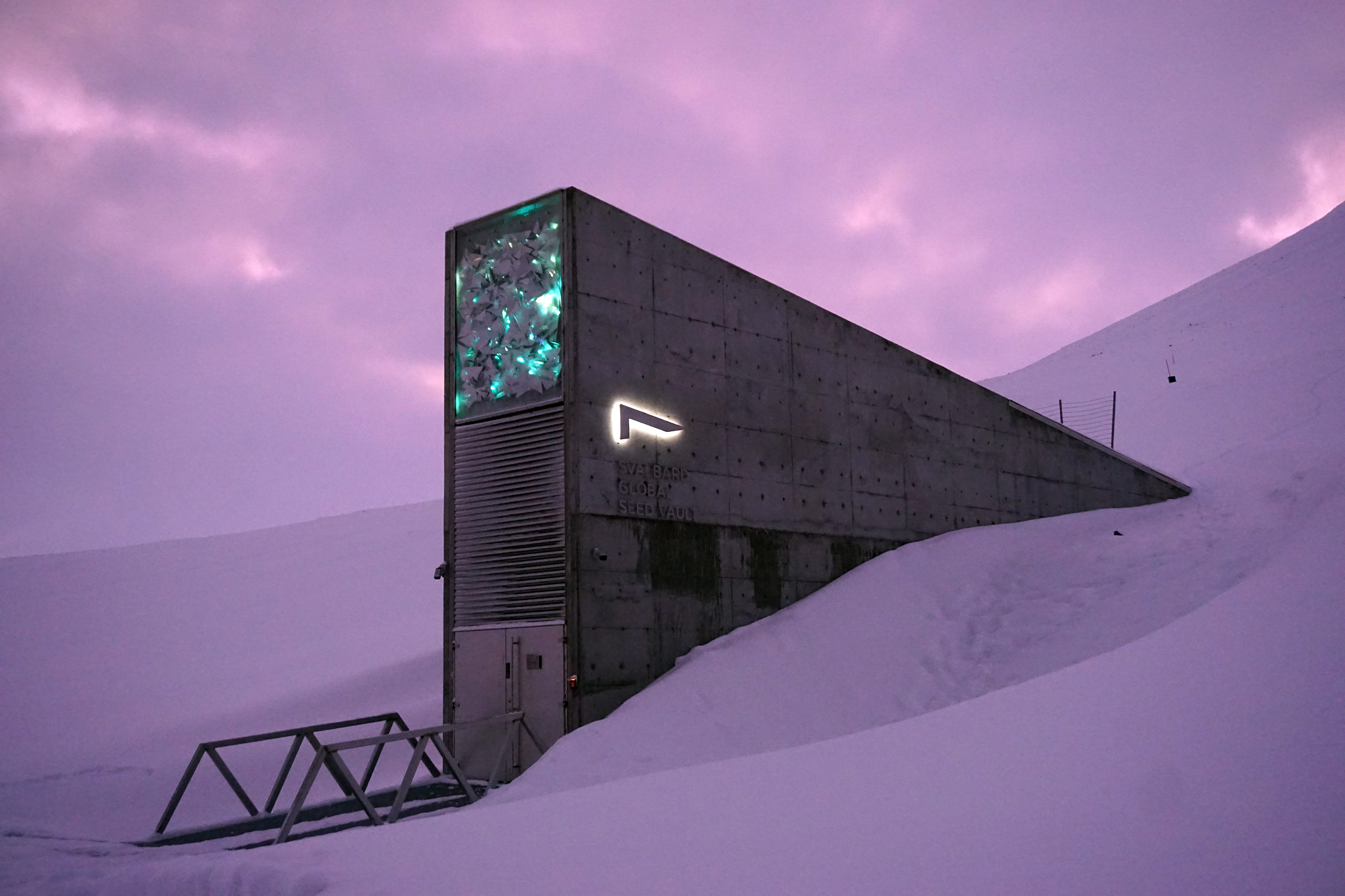
Photo: Warm colors surround the icy Svalbard Global Seed Vault after its first opening of 2022. Credit: Shaliz Barzani for the Crop Trust – February 15, 2022. Attribution: “Seasonly Secured” by Crop Trust via Flickr. CC BY-NC-SA 2.0. Article by Kat Barandy. Designboom – October 22, 2026.
The loneliest plant on earth lives under glass
Inside London’s Kew Gardens, a cycad called Encephalartos woodii has spent more than a century beneath the glass roof of the Victorian Temperate House. Its enormous crown of dark green fronds appears perfectly healthy, though it may be one of the loneliest plants on Earth. Discovered in South Africa in 1895, the species is known from a single wild individual. It was male. Every surviving specimen is a clone of that original plant, and a female has never been found. The species is now classified as Extinct in the Wild, while its descendants continue growing in botanical collections around the world. […]
Click here to view the original article at www.designboom.com


 GOOG

 IBM

 AMZN
 AAPL
 DELL
 INTC
 MSFT
 TSLA
 META
 EBAY
 NVDA
 NFLX
 HPE
 LUMN
 ORCL
Top notch service and a great selection of options. It is refreshing to find a site that is this stable and responsive. br7gbet is definitely worth a visit.
Top notch service and a great selection of options. It is refreshing to find a site that is this stable and responsive. br7gbet is definitely worth a visit.