
Figuring out where cosmic neutrinos come from is tricky ‑ radio telescopes could help find where these ‘ghost particles’ originate
1 min read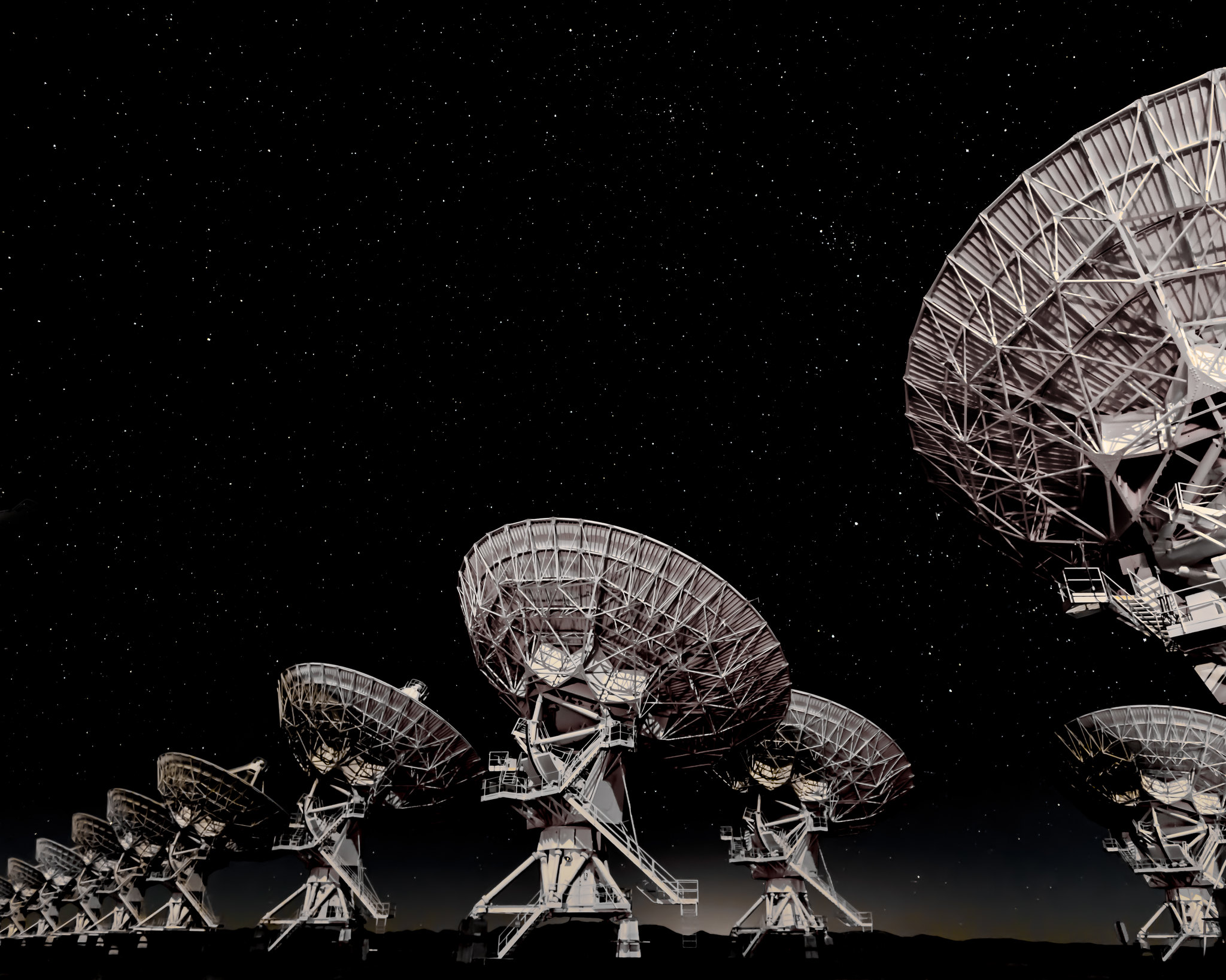
Photo: The Karl G. Jansky Very large Array (VLA) is a radio astronomy observatory located on the Plains of San Agustin, about 50 miles west of Socorro, New Mexico. It comprises 27 25-meter radio telescopes in a Y-shaped array. […] Attribution: “Very Large Array” by mwwile via Flickr. CC BY-NC-ND 2.0. Article by Yjan Gordon. The Conversation – October 30, 2026.
Neutrinos are funny little particles that weigh almost nothing, making them one of the universe’s most elusive building blocks. They can come from objects as mundane as bananas and as exotic as supernovas – the exploding death throes of massive stars. Most neutrinos stream through space and pass through the Earth without interacting with anything. An experiment called IceCube, built to detect these “ghost particles” emitted from astrophysical events, just won a Nobel Prize. As a physicist, I’m interested in figuring out where the neutrinos IceCube detects come from. A study that my colleagues and I published in October 2026 suggests that we could potentially use radio telescopes to answer this question. […]
Click here to view the original article at www.theconversation.com
Video: IceCube high-energy astrophysical neutrinos – IceCube Neutrino Observatory







 GOOG

 IBM

 AMZN
 AAPL
 DELL
 INTC
 MSFT
 TSLA
 META
 EBAY
 NVDA
 NFLX
 HPE
 LUMN
 ORCL