
Here’s how engineers plan to save the satellite sent to save NASA’s Swift mission
1 min read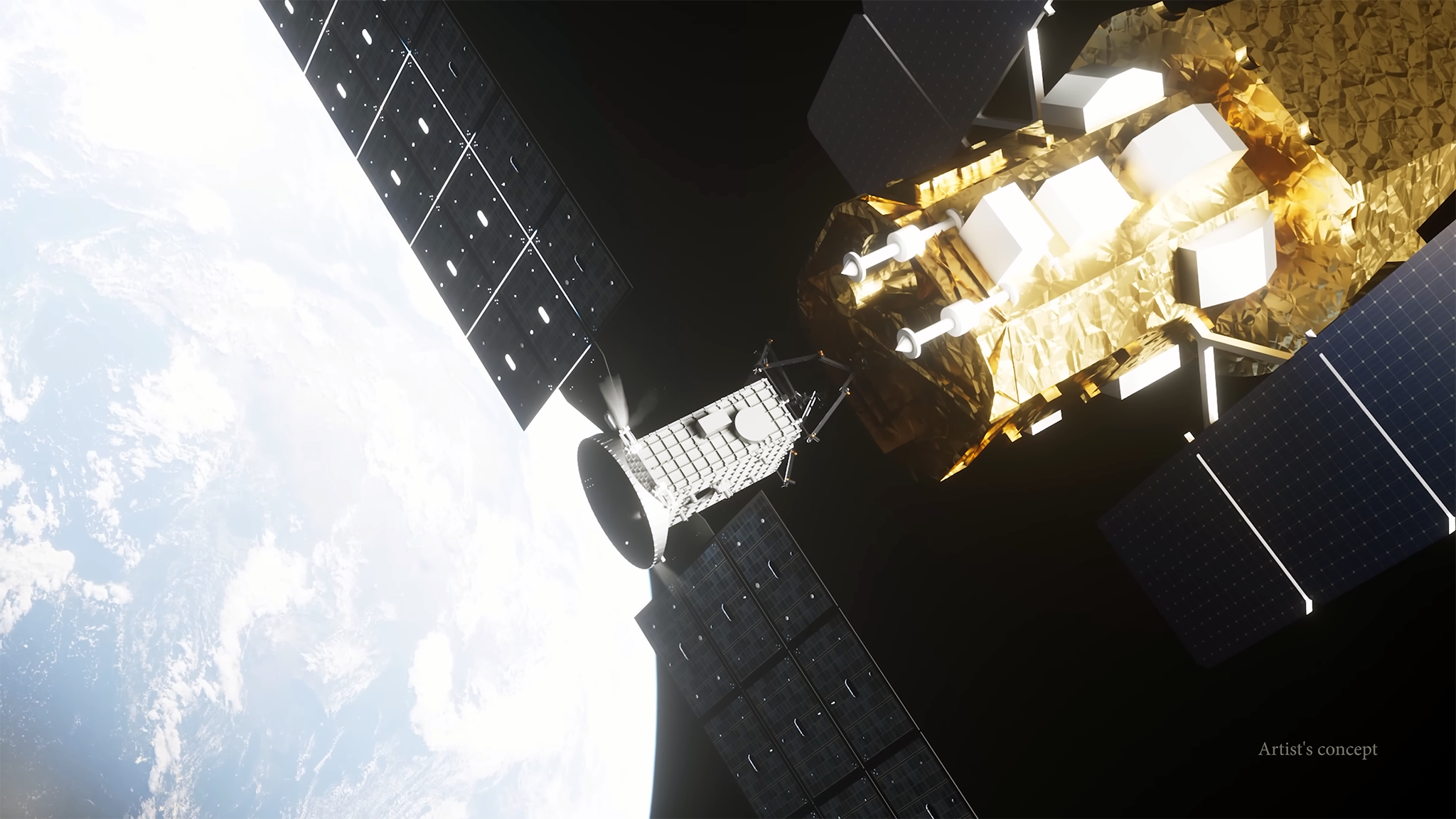
Screenshot from the video “NASA’s Swift Mission Gets a Boost” – NASA Goddard. Image credit: NASA’s Goddard Space Flight Center / Katalyst Space / Northrop Grumman. Article by Stephen Clark. Ars Technica– August 1, 2026.
One week ago, more than 200 miles above the Earth, a refrigerator-size satellite making its way toward an attempted rescue of NASA’s $500 million Swift gamma-ray observatory suddenly spun out of control. It didn’t look good. The spacecraft, named Link, was rotating on multiple axes, rendering it unable to maintain a reliable communications link with the ground and complicating efforts to arrest the spin. Two of the satellite’s three reaction wheels, used for pointing, also stopped working. Through sporadic radio contact, engineers discovered a problem with some of the spacecraft’s cold gas thrusters used for finer attitude control. […]
Click here to view original web page at www.arstechnica.com
Video: NASA’s Swift Mission Gets a Boost – NASA Goddard.







 GOOG
GOOG
 IBM
IBM
 AMZN
AMZN AAPL
AAPL DELL
DELL INTC
INTC MSFT
MSFT TSLA
TSLA META
META EBAY
EBAY NVDA
NVDA NFLX
NFLX HPE
HPE LUMN
LUMN ORCL
ORCL